The harsh fluorescent lights of Riverbend Children’s Hospital in Austin washed the hallway in a pale glow.
The floors gleamed from constant cleaning, and the sharp scent of disinfectant mixed with the bitter smell of coffee that had been reheated far too many times. It was well past midnight, yet the corridor outside Room 417 never truly slept—machines hummed softly, and the distant footsteps of nurses echoed through the quiet.
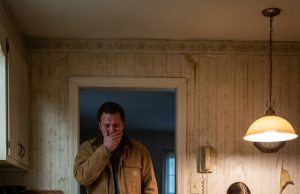
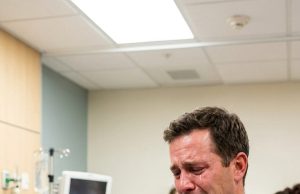
Brandon Keller sat rigidly in a plastic chair beside his son’s bed. His tie hung loose, his shirt was creased, and deep shadows sat beneath eyes that hadn’t known real rest in days. His hand stayed tightly wrapped around his little boy’s fingers, as if letting go might allow something precious to disappear.
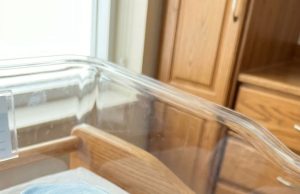
Lucas Keller was only four. He should have been chasing pigeons in the park or demanding one more bedtime story. Instead, he lay beneath thin hospital blankets, wires secured to his small chest, a breathing mask covering part of his face. Each breath sounded uncertain, like the world itself was hesitating.
Dr. Raymond Ivers stood at the foot of the bed, scrolling through data on a tablet with practiced calm. His voice was gentle, but heavy—the kind doctors use when hope has worn thin.
“Mr. Keller,” he said carefully, “we’ve exhausted every available treatment. We’ve consulted specialists across three states. Lucas’s condition is extraordinarily rare. There are only a handful of documented cases, and none showed lasting improvement.”
Brandon felt the room tilt.
“So… what happens now?” he asked, forcing steadiness into his voice.
The doctor hesitated, then sighed.
“At this point, our focus is comfort. A few days, perhaps a week if his body holds. I’m truly sorry.”
Brandon stared at his son’s small chest rising and falling.
“There has to be something else,” he said. “I have resources. I can bring in anyone. Buy any equipment. Just tell me.”
Dr. Ivers shook his head slowly.
“We’ve already contacted the best facilities in the country. Sometimes medicine reaches its limits. When that happens, all we can do is be present.”
After the doctor left, Brandon bent forward and pressed his forehead against the back of Lucas’s hand.
“How am I supposed to tell Natalie?” he whispered.
His wife was attending a legal conference in Denver. She’d be back in two days—two days that suddenly felt unbearably cruel.
The door opened with a soft creak.
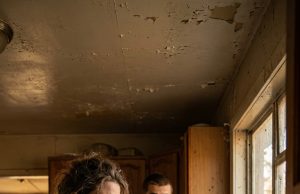
Brandon looked up, expecting a nurse. Instead, a small girl stepped inside. She looked about seven, wearing a faded blue school uniform and scuffed sneakers. Her brown hair was pulled into a loose ponytail that kept slipping free. In her hands was a tiny plastic bottle painted gold.
“Who are you?” Brandon asked sharply. “You shouldn’t be in here.”
The girl didn’t answer right away. She walked calmly to the bedside, climbed onto a stool, and looked down at Lucas with solemn focus.
“I’m going to help him,” she said quietly. “Don’t worry.”
Before Brandon could stop her, she uncapped the bottle and gently poured a few drops of water onto Lucas’s forehead. The water ran down his temple, dampening the pillow.
“Hey!” Brandon jumped up, grabbing the bottle. “What do you think you’re doing?”
The girl reached for it desperately.
“It’s special water,” she insisted. “It helps when people are very sick.”
Brandon hit the call button.
“Security,” he said tightly. “There’s someone in my son’s room.”
Two nurses rushed in. One of them—a young woman with exhausted eyes—recognized the child immediately.
“Ivy,” she said gently. “What are you doing here again?”
From the hallway came a frantic voice.
“Ivy? Ivy, where are you?”
A woman in a gray maintenance uniform hurried in, face flushed with panic. She grabbed the girl’s hand.
“I’m so sorry,” she told Brandon. “My name’s Denise. I clean this floor. She shouldn’t have come in. We’re leaving.”
“I just wanted to help Lucas,” Ivy cried. “He’s my friend.”
Brandon froze. “How do you know my son’s name?”
Denise faltered. “She must’ve seen the chart,” she said quickly.
“No,” Ivy said firmly. “We played at Sunny Steps. We built a block tower, and he made dinosaur noises.”
“My son has never been to school,” Brandon said quietly. “He has a nanny.”
Denise’s shoulders slumped. “Please forgive us,” she whispered. “We’ll go.”
They left, leaving Brandon staring at the damp pillow and the small golden bottle. He opened it and smelled the contents—plain water.
That afternoon, he called the nanny.
“Tell me the truth,” he said. “Did you take Lucas to a kindergarten?”
After a long pause, she answered shakily. “Only twice a week. He was lonely. It was safe. I thought I was helping.”
Brandon closed his eyes. “Where?”
“East Austin,” she said softly.
That night, Brandon slept in the chair. He woke to a whisper. Ivy was back, sitting beside Lucas, holding his hand, telling a story about a brave knight who refused to let monsters win.
“How did you get in?” Brandon asked hoarsely.
“Staff entrance,” Ivy said matter-of-factly. “I know where Mom keeps her badge.”
“You can’t keep doing this,” Brandon said.
“Lucas needs someone who believes he’ll get better,” she replied. “Everyone else looks sad.”
Brandon noticed Lucas’s cheeks looked slightly less pale. Probably imagination—yet it stopped him cold.
The nurse from earlier, Paige Turner, stepped in quietly.
“I should ask her to leave,” she said softly. “But I need to tell you something. After her visit earlier, Lucas’s oxygen levels improved slightly. Not much—but enough to register.”
Brandon looked at Ivy.
“What’s in the bottle?” he asked.
“Water from the fountain behind the hospital,” Ivy said. “My grandma said it used to be a healing well.”
Brandon laughed weakly. “That sounds like a fairy tale.”
“Do you believe in doctors?” Ivy asked.
“Yes.”
“And they said they can’t help anymore,” she replied. “So why not believe in something else too?”
Brandon had no answer.
By morning, he dipped his fingers into the bottle and touched Lucas’s forehead.
“If anything is listening,” he whispered, “please.”
Lucas stirred.
“Daddy,” he murmured. “Ivy came to see me.”
Brandon broke down.
Later, Dr. Ivers stopped him.
“Lucas’s labs are slightly improved,” he said. “It’s unexpected. We’re observing.”
When Natalie arrived, Brandon told her everything. She listened, then said softly, “If that girl makes him smile, she’s welcome.”
And Ivy came every day.
Lucas grew stronger.
Doctors whispered. Charts were studied. Some called it remission. Others said miracle.
Brandon stopped asking why.
When Lucas was discharged, Ivy waited by the fountain, holding the golden bottle.
“I told you,” she said.
Years later, Lucas kept that empty bottle on his desk.
“It wasn’t the water,” he told Ivy. “It was you.”
Brandon watched from the doorway, knowing one thing for certain:
When the world said there was no hope, a little girl refused to accept that answer—and because of that, their lives were given back.