In a place meant for concrete and steel, they built something softer — a small shelter… and a big act of humanity.
On Monday, they entered to demolish an abandoned construction site… and found a mother trembling over five l*ves that wouldn’t s*rvive the cold
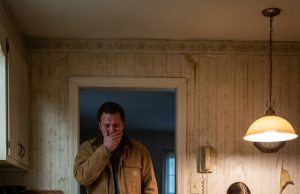
The teacher opened his mouth.
But he didn’t scream.
He didn’t ins*lt.
He did not order her to be removed.
He stared at the little dog for a few seconds that seemed like an eternity. Then he slowly exhaled, took off his cap, and said something no one expected.
—Nobody touches them.
The silence was so profound that you could even hear a drop falling from a broken pipe.
Toño blinked.
Chava lowered her shoulders.
And the little dog, as if she had understood the tone but not the words, lay down again on top of her puppies without taking her eyes off the men.
—But they can’t just stay here like this —added the teacher, looking around—. If the dust starts, if water falls on them, if someone steps wrong… they’ll d*e right here.
That was enough.
Without anyone formally suggesting it, the crew put their tools down and moved as if they had received the most urgent order of the day.
One of them pulled some sheets of metal.
Another searched for whole boards among the piled-up material.
One more took out bent nails and began straightening them with a hammer on a stone.
They weren’t building a wall.
They were setting up an opportunity.
Toño went to get a clean bucket and filled it with water.
Chava appeared with a piece of thick rubber to insulate the wet floor.
Ramiro, the quietest of them all, tore an old t-shirt he had in his backpack and folded it near the puppies so they wouldn’t touch the wet cardboard.
The teacher watched them work for a moment.
Then, without saying a word, he himself carried a large sheet of metal and placed it on four boards to improvise a roof.
In less than an hour, where there had previously been a cold and abandoned corner, an emergency shelter appeared.
Ugly.
Crooked.
Patched.
Perfect.
The little dog wouldn’t let anyone get too close, but she wasn’t showing her teeth anymore. She was still trembling. From f*ar. From h*nger. From exhaustion. Even so, she stayed still while they protected the area around her.
—Poor thing… she gave birth here all alone —Toño murmured.
—And she endured it all weekend —Chava replied, her voice strained—. All by herself.
That day they worked less than planned.
Nobody complained.
Every time they passed by, they turned around to see if the puppies were still breathing.
At noon, Ramiro returned with a bag of cheap croquettes he had bought with his own money at the corner store. He left it nearby and slowly backed away.
The little dog took several minutes to approach.
First he sniffed.
Then he looked at his children.
And finally, without ceasing to watch the men, she began to eat as if she had been hungry for days.
“I’ve been hungry for weeks,” the teacher said softly.
No one answered.
Because everyone was thinking the same thing.
If they hadn’t arrived that morning… perhaps by Tuesday there would be no one left al*ve in that corner.
The following days the routine changed.
The play started at seven.
But before loading blocks, before mixing cement, before lifting rebar, someone checked the water.
Someone was filling the plate.
Someone was gently sweeping around so as not to raise too much dust.
And someone, always someone, would bend down to count them.
One.
Two.
Three.
Four.
Five.
They were still there.
Al*ve.
The puppies grew up amidst the noise of hammers, radios playing, and shouts of “Pass me the mix!” They learned to sleep to the echo of construction and to recognize the boots of those who brought them food.
The little dog changed too.
At first, she would shrink whenever a man approached.
It was stuck to the ground.
He lowered his head.
Sometimes he would tremble even when they left him food.
That was what hit the crew the hardest.
She wasn’t just a stray dog.
She was a b*tch who already knew cr*elty.
“She was b*at*n up,” Ramiro said one afternoon, looking at an old sc*r near her back.
“Or they kicked her out from all sides,” Chava added.
The teacher didn’t say anything.
But that afternoon, on his way out, he bought a new sack and folded it inside the little house so that the mother and the puppies would sleep drier.
Nobody made fun of him.
Not even Toño, who made fun of everything.
As the weeks passed, the project ceased to be a simple construction and became something strange. Something no one said aloud, but everyone felt.
They wanted to arrive.
They wanted to see them.
They wanted to check that they were still okay.
The puppies opened their eyes.
Then they started tripping over each other.
Then he staggered out of the little house.
One was white with brown spots.
Another black man with a white ch*st.
There was a tiny little female who didn’t seem to grow at the same rate as the others and who insisted on biting Toño’s shoelaces every time he sat down to eat.
“She’s already chosen me,” he said, feigning indifference.
—Yes, of course. You were the chosen one —Chava laughed—. You even talk to her like she’s your daughter.
And if.
I was talking to him.
Everyone did it.
What had begun as an impulsive act turned into a silent web of affection.
Ramiro brought them leftover shredded chicken.
Chava bought a dewormer with the help of his wife, who worked cleaning at a veterinary clinic.
The teacher pretended not to be involved, but he was the first to check if the roof canvas was still secure when rain threatened.
One Friday, a storm hit so hard that water began to seep through part of the property. The wind was rattling the sheets of metal roofing, and half the men had already left when Toño shouted from the entrance:
—The little house!
In seconds, three men ran through the rain.
The water was already seeping into the corner.
The little dog barked d*sp*rately as the puppies huddled against the wall.
Chava took off her jacket and covered the opening.
Ramiro carried two blocks to raise the edge of the shelter.
Toño, soaked to the bone, reached in without thinking and began to pull the puppies out one by one.
The little dog tried to b*te him.
Not out of malice.
Out of panic.
But when she saw him trembling with one of the babies clinging to his ch*st, she fr*ze.
“Relax, skinny… relax… I’m getting them out,” Toño repeated.
They put them inside a makeshift office while they reinforced the little house.
That night they stayed two extra hours.
They didn’t charge a penny.
When they finished, the puppies went back in dry, protected, and alive.
The teacher looked at them from the doorway, his pants covered in mud.
“I’ve built entire buildings,” he said, almost to himself. “But I’ve never felt so much pressure over a tin roof.”
Nobody laughed.
Because everyone knew he was telling the truth.
As the months passed, the little dog stopped hiding.
I remained alert, yes.
But she would wag her tail when she saw certain men approaching.
Especially to the teacher.
That surprised everyone.
Because the teacher, Don Julián, had a reputation for being strict. One of those who corrected students by shouting. One of those who said that there was no room for sentimentality on construction sites.
But one afternoon they found him sitting alone, in the shade of an unfinished wall, with the little dog lying at his feet.
“Just look at that,” Toño whispered.
Nobody said anything.
Later, Chava found out something.
Don Julián’s daughter had d*ed years ago.
She was a five-year-old girl.
A poorly treated pn*um*nia.
He didn’t like to talk about it.
He almost never mentioned his family.
Perhaps that’s why, whenever he saw the dog lie down on top of her puppies when there was noise or d*ng*r, he stayed still for longer than usual.
Perhaps that’s why he couldn’t stand the idea of throwing her out on the street.
Or perhaps no explanation was needed.
Sometimes p*in recognizes pain before words do.
When the work had been going on for two and a half months, the real problem appeared.
A white van parked outside.
The owner of the land came down with two men in suits.
They were going to review the progress before the delivery.
Everything was going well until one of them heard barking.
“What is that?” he asked, frowning.
No one responded immediately.
The man walked to the corner and saw the little dog with her puppies, who were already quite grown.
Her face changed instantly.
“I want those animals out today,” he blurted out. “This isn’t a shelter.”
Toño clenched his fists.
Chava stepped forward.
But Don Julián stopped them with a look.
“They don’t bother anyone,” he said calmly. “The construction site is clean. They’re vaccinated and fed.”
“I don’t care,” the man snapped. “The final customer is coming tomorrow. I don’t want dogs here. Take them outside or I’ll call animal control.”
The little dog, as if she understood the d*ng*r, backed away until her body was in front of the puppies.
They all felt the same.
Rage.
D*sg*st.
Imp*t*nce.
After three months of caring for them, saving them from the cold, hunger and rain… all it took was one order to undo everything.
“With all due respect, engineer,” Chava said, swallowing his anger, “if we take them out like this, they’re going to get taken away or run over.”
—That’s not my problem.
The words fell like a stone.
Then something happened that no one expected.
Don Julián took off his cap.
He held it in his hands.
And he said:
—Well then, it is mine.
The man looked at him, incredulous.
—What did you say?
—If you want to hand over the building without dogs, it can be handed over without dogs tomorrow. But today, nobody is going to throw them out into the street like tr*sh.
—Don’t come at me with sentimentality, Julian.
“These aren’t sentimentalities,” he replied, looking at him intently. “They’re living beings.”
One of the men in suits let out a dry laugh.
—Are you going to jeopardize the contract for some dogs?
And Don Julián responded with a voice that left even his own workers fr*zen.
—I already l*st a daughter because I was too late to protect a l*fe. I’m not going to look the other way again.
The silence was br*tal.
Toño felt a l*mp in his thr*at.
Chava lowered her head.
Even the landowner seemed bewildered for a second.
Don Julián continued speaking.
—The work is perfect. You know that. If you want to be angry, be angry with me. But the mother and her young are not to be touched until they have a safe place.
The man was about to explode.
It showed on his face.
But I also understood something.
The entire crew was with the teacher.
No one was going to obey such an order without br*aking inside.
And provoking a conflict one day before the delivery was not in his best interest either.
“You have until first thing tomorrow,” he finally grumbled. “After that, I don’t want to see a single queue here.”
He turned around and left.
Only when the truck disappeared into the distance did everyone let out a sigh of relief.
But now they had another problem.
They had to find homes for six dogs in less than 24 hours.
That afternoon nobody left early.
Toño called his girlfriend.
Chava to her brother-in-law.
Ramiro to a neighbor who always picked up animals.
Even two assistants who hardly spoke started asking around among family members.
The news spread quickly through the neighborhood.
That in the play there was a noble little dog with five puppies.
That the bricklayers had cared for them since they were newborns.
They urgently needed a home.
As night fell, a woman arrived with her two young children and fell in love with the white puppy with brown spots.
A retired gentleman adopted the white-chested black dog to keep his sick wife company.
Ramiro’s neighbor took the smallest female and promised to put her to sleep inside, with blankets.
Each goodbye hurt and at the same time brought relief.
The men carried the puppies as if they were made of glass.
They were petting them more than necessary.
They spoke to them in hushed tones.
As if they wanted to leave their voices recorded on them.
The mother watched them leave one by one.
That was the hardest part.
I wasn’t running after him.
It wasn’t barking.
I just followed every move with a heartbreaking mixture of alertness and sadness.
“He’s going to think we’re taking them away from him,” said Toño, his eyes red.
“No,” murmured Don Julián. “She’ll understand when she sees them going to better places.”
In the end, two puppies were left homeless.
Chava took one of them.
The other one, of course, ended up in Toño’s arms, who still had the nerve to say:
—Well… just until it gets settled.
Everyone laughed for the first time in days.
Only the mother was missing.
And then came the final surprise.
Don Julián approached slowly.
He crouched down in front of her.
The little dog sniffed him.
Then, for the first time since they found her, she rested her snout on the teacher’s knee.
That strong, dry man, used to noise and concrete, closed his eyes for a second.
“Let’s go, skinny,” he whispered.
Nobody made fun of him.
Nobody said anything.
Because everyone saw that his voice was broken.
The next morning, when the owner of the land arrived, the work was immaculate.
No trace of dogs.
No plates.
No cardboard boxes.
Without the tin shack.
But the bricklayers had not completely destroyed it.
Don Julián had carefully disassembled the best pieces and taken them home to reassemble them in the yard.
Months later, Toño went to visit him.
He found the little dog asleep under that same sheet metal roof, now painted blue.
Chubby.
Shiny.
Peaceful.
Next to it was a chewed ball and a clean plate.
—And what’s his name? —Toño asked.
Don Julián barely smiled.
-Construction site.
-Construction site?
—Yes. Because the best one I made wasn’t made of concrete.
Toño let out a laugh, but his eyes welled up with tears.
He looked around.
The little house.
The little dog.
The peace of that courtyard.
And he understood that some constructions don’t appear on plans, nor are they inaugurated with applause, nor do they leave money.
But they maintain something more important.
Life.
Years later, when someone in the neighborhood pointed to Don Julián’s house and asked why an old construction foreman treated a stray dog like family, the neighbors gave the same answer:
—Because one day she arrived at a construction site seeking refuge… and ended up reminding everyone that they were still human.
And perhaps that’s why, among so many walls built and so many roofs delivered, the crew never forgot that small tin-roofed house.
Because while they were building a house for others, without realizing it, they saved a home that was about to disappear.
And that, although no one paid for it or showed it off in plans, was the most important work of their lives.