The Guardian of the Hidden Sanctuary
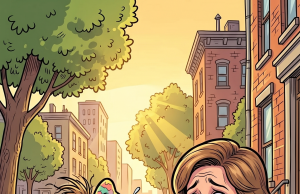
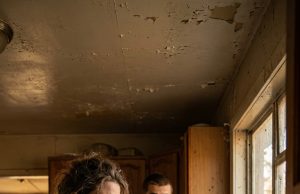
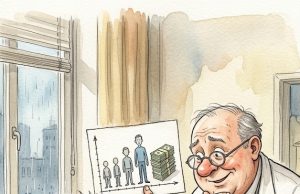
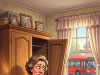
“Just finalize the documents so we can clear the lot and put the property on the market,” I spoke into my phone, my voice echoing with a cold, business-like detachment as I used my boot to shove open the rusted wrought-iron gate of my childhood home. I hadn’t exchanged a single word with my father in over eight years, primarily because he was a man defined by a suffocating, joyless austerity that turned our house into a fortress of penny-pinching. He was a high school mathematics instructor who lived a life of extreme repetition, rotating the same four threadbare shirts for a decade and maintaining the winter thermostat at a bone-chilling fifty degrees to avoid an extra nickel on the utility bill. Throughout my upbringing, every cent I ever spent was meticulously recorded in a weathered black ledger as if my childhood were a line item in a budget. I vividly remember the day in second grade when I begged for a puppy, only to be met with a grueling two-hour lecture regarding the depreciating value of domestic animals and the prohibitive, unnecessary burden of veterinary expenses. On the very afternoon I turned eighteen, I fled for the West Coast, swearing that I would never again set foot in his world of calculated misery and freezing hallways.
An Unexpected Resident
Now, he was gone, having suffered a sudden heart attack right in the middle of a geometry lesson, and I had returned to the Midwest with the sole purpose of liquidating what remained of his meager existence. The estate attorney had contacted me a week prior, claiming the inheritance was valued at two million dollars, which I assumed was simply the result of him hoarding his modest pension out of pure, stubborn spite. I turned the key in the peeling front door, bracing myself for the familiar scent of stale dust and cheap soap, but instead, I was greeted by the rhythmic, heavy thud of a tail hitting the floor. I froze in the dim corridor as a massive, heavily scarred pit bull came into view, reclining on the worn living room rug with a quiet, watchful dignity. He was missing his front left leg, the stump healed over with thick, silver scar tissue that told a story of a very difficult past. As I instinctively reached behind me for the doorknob, my heart hammering against my ribs, the dog didn’t growl or show any sign of aggression; he simply lifted his blocky head and looked at me with the most soulful, sorrowful eyes I had ever encountered.
The Sprawling Secret Beyond the Kitchen
The dog pushed himself up with a clumsy grace, limping across the creaking floorboards until he reached my side and gently nudged my knee with a cold, damp nose. He delicately took the hem of my trousers in his teeth, tugging me with a soft persistence toward the rear of the house before letting go to take a few awkward hops toward the back door. I followed him through the kitchen, my pulse racing, and when I pushed open the heavy wooden door to the backyard, the air was instantly sucked from my lungs. The overgrown, junk-filled lot of my memories had been transformed into a sprawling, immaculate sanctuary enclosed by high, professional-grade privacy fencing. There were three modern, climate-controlled outbuildings with gleaming glass entrances and custom-built wooden ramps designed for easy access. Scattered across the pristine green grass, resting on thick orthopedic cushions or wandering slowly under the oak trees, were dozens of dogs. I saw golden retrievers with the cloudy eyes of the blind, small terriers navigating the lawn in custom wheelchairs, and ancient, gray-muzzled hounds sleeping peacefully in the afternoon shade.
A Legacy of Compassion
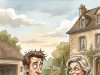
A young woman dressed in green veterinary scrubs emerged from one of the structures, clutching a metal clipboard, and she paused when she noticed me standing on the porch in stunned silence. “You must be his son,” she remarked quietly, introducing herself as the local veterinarian who had helped manage the facility for years. I struggled to find my voice, eventually gesturing toward the massive complex and asking where on earth a high school teacher found the resources for such a monumental undertaking. “Every single dollar he ever set aside went into this land,” she replied softly, walking over to scratch the three-legged pit bull behind his ears. “This is Silas, and he was at the very top of the list for termination at the city pound, much like almost every other dog you see resting here.” She explained that my father specialized in taking the animals that the rest of the world had discarded—the seniors, the terminally ill, and the ones labeled with behavioral issues that made them unadoptable. “But my father always claimed to despise dogs,” I argued, my chest tightening with a confusing mix of emotions, “he told me they were a total waste of time and money.”
The Math of Redemption
The veterinarian offered me a sad, knowing smile that made me feel incredibly small. “He didn’t hate them at all; he just realized he couldn’t afford to save them while he was working himself to the bone to ensure you had a college fund waiting for you,” she whispered. I felt as though I had been physically struck, remembering how I had pridefully taken out massive student loans just to spite him, refusing to accept a single penny of his support when I left. She led me into the main building, which was spotless and smelled of fresh lavender, though the walls were not covered in medical charts but in large whiteboards filled with complex calculus and algebra. When I asked why there was advanced mathematics in a kennel, she explained that my father never truly retired from teaching. He would bring in the “lost causes” from the local high school—the teenagers from broken homes who were drifting toward serious trouble—and offer them free tutoring every week. In exchange for his help, these angry, wounded kids had to feed, bathe, and walk the dogs, learning through the animals that even something broken and abandoned is still capable of giving and receiving love.
A Box of Unspoken Truths
The two-million-dollar estate the lawyer had mentioned wasn’t a hoard of cash in a bank account; it was the appraised value of this land, the medical equipment, and a trust fund he had quietly established to ensure the sanctuary survived him. The veterinarian opened a filing cabinet and handed me a heavy cardboard box, stating that he had left it specifically for me to find. I sat on a wooden bench, surrounded by the quiet, comforting presence of the senior dogs, and began to sift through hundreds of handwritten notes from former students who had graduated college instead of ending up in the system. There were letters from rescue organizations calling my father a silent saint, and at the very bottom, I found a single white envelope with my name written in his sharp, familiar hand. As my fingers brushed the paper, Silas limped over and rested his scarred head on my lap, dropping a faded red rubber superhero figure onto my knees. It was the exact toy I had lost in the park when I was seven years old—the loss that had prompted a harsh lecture on responsibility and a refusal to buy a replacement.
The Weight of a Red Rubber Toy
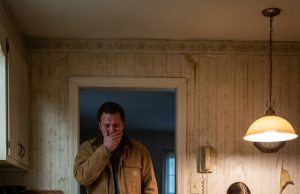
My hands shook violently as I tore open the envelope and began to read the letter written on cheap, yellow notebook paper. “If you are reading this, it means my old heart finally gave out, and I know you likely remember me as a cold and miserable man,” he wrote. He explained that after my mother passed away so suddenly, he had been paralyzed by the fear of raising a grieving boy alone, and he only knew how to provide through rigid discipline and relentless saving. He thought that by making me tough, he was helping me survive a world that had already been so cruel to us, but he realized too late that he had only succeeded in making me feel burdensome. “When you left, the silence in this house was so heavy I could barely breathe,” the letter continued. “I went back to that park the very next day and searched the mud for hours until I found that toy you lost, and I have kept it in my pocket every single day since then.” He wrote that he had started visiting shelters just to be near something alive, finding a kinship with the creatures who were misunderstood and forgotten by the world.
A Final Choice
“I couldn’t bridge the distance between us, no matter how much I wanted to, because I was too proud and too terrified that you would reject me,” he confessed. He admitted to pouring all that stifled love into the dogs instead, and he told me that he spent every night talking to Silas about me so the dog would know the scent of the person he loved most. The final lines of the letter shattered what was left of my composure. “This inheritance isn’t a gift of money, but a choice; you can sell this lot tomorrow and walk away, and I promise I won’t hold it against you,” he wrote. “But I hope you look into Silas’s eyes and realize that no matter how damaged a soul might be, it still deserves a place to belong.” I slid off the bench and buried my face in the dog’s thick neck, sobbing until my throat was raw for the years I had wasted on pride and for the man who lived in a freezing house just so he could provide for strangers and abandoned animals.
The New Life in the Midwest
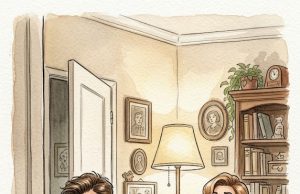
That revelation took place exactly eight months ago, and I never boarded my return flight to the West Coast. I contacted my employer at the software firm, resigned from my position immediately, and had my life packed into a single shipping container. I live in that drafty, peeling house now, often wearing my father’s old button-down shirts because they still carry the faint scent of chalk and old books. Every morning at dawn, I step out the back door to prepare meals for the blind retrievers and adjust the harnesses on the wheelchairs for the terriers. At three o’clock every afternoon, the local teenagers arrive to sit at the whiteboards, working through their fractions and equations while the senior dogs sleep at their feet. I stand in the spot where my father once stood, helping them find the answers to their homework while Silas remains steadfastly by my side. Tonight, as the sun dipped below the horizon, Silas dropped that red rubber toy at my feet and rested his heavy head on my knee, and for the first time in my life, I truly felt like I was home.