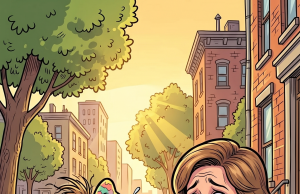
My name is Marina, and if there is one truth my life has taught me, it’s this: no amount of money can replace what only a compassionate heart can see.
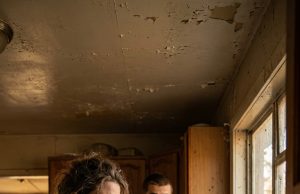
I earn my living mopping floors. My palms are cracked from bleach, my spine aches every night when I return to my tiny home on the edge of town. I never went to college; I didn’t even finish high school because someone had to pay for my grandmother’s medicine.
But what I uncovered inside Don Sebastián Calloway’s mansion is more valuable than any framed diploma hanging in the executive offices he visits.
Everyone in Mexico knows the Calloway name. Doors fly open for him that would remain forever locked for someone like me. He owns multiple companies, takes private jets, and lives on a sprawling Valle de Bravo estate straight out of a soap opera.
Yet in that grand house, misery hung heavier than crystal chandeliers.
His eight-year-old son, Luciano, was at the heart of it all.
The boy was believed to be deaf. According to reports from the top specialists in Zurich, Tokyo, and Houston, he had profound, irreversible sensorineural hearing loss. Don Sebastián had poured millions into chasing a miracle—any sign of hope.
Every doctor gave the same verdict: “Nothing can be done.”
Luciano’s mother had died delivering him. Broken by grief, Don Sebastián buried himself in an obsession to “fix” his child while failing entirely to connect with him. The boy lived in absolute silence, surrounded by untouched luxury toys and nannies who treated him more like priceless décor than a human being.
I took the job on a stormy Tuesday because I had no choice—my grandmother’s health was declining, and medication prices were climbing.
“Don’t look the master in the eyes. Don’t make noise. And most importantly, don’t bother the child,” warned the head housekeeper, Doña Gertrudis, stiff as a rod.
I simply nodded.
I was assigned to clean the east wing, the area where Luciano’s room was. It was a spacious, sunlit place… yet strangely hollow.
The first time I saw him, he sat on the floor assembling an enormous jigsaw puzzle, unaware of my presence.
“Excuse me,” I whispered, even though it didn’t matter.
I dusted shelves while watching him discreetly. He was a beautiful child—dark curls, soulful eyes—but weighed down by sadness.
And that’s when I noticed something odd.
Luciano kept touching his right ear. Not absentmindedly—again and again—rubbing it, tugging the lobe, grimacing faintly.
Weeks went by. I became almost invisible in that house. I cleaned in silence. I observed. I wondered.
Then one afternoon, while I was sweeping under his bed, he started gently knocking his head against the wall—thump, thump, thump.
Panicked, I ran to him.
“No, sweetheart!” I cried, forgetting he couldn’t hear.
He stopped only when he felt the vibration of my footsteps. He pointed at his ear, then made a gesture like a door slamming shut.
That night, I couldn’t sleep. My grandmother always said, “The body speaks if you’re willing to listen.”
Why would a child supposedly deaf from nerve damage obsess over his physical ear? That kind of deafness shouldn’t cause localized discomfort.
The next day, I made a decision that could cost me everything.
With Don Sebastián out in Mexico City and Gertrudis occupied outdoors, I entered Luciano’s room—not to clean, but to look closer.
I sat on the floor in front of him. He was startled; no one ever sat with him.
I smiled gently. He gave a tiny, fragile smile back.
From my pocket, I took a small flashlight and a bottle of almond oil.
“I’m just going to check, my little one,” I murmured, although he couldn’t hear me.
I gestured for him to lie with his head on my lap. He hesitated, then surrendered with the aching trust of a child starved for affection.
His hair smelled of expensive shampoo, but his skin was cold.
I inspected the left ear—perfectly normal.
Then I turned to the right.
Luciano stiffened. A faint groan escaped him.
“Easy… easy,” I soothed.
I shone the light deeper.
What I saw froze me.
It wasn’t an injured eardrum.
It wasn’t emptiness.
Something foreign was lodged inside. Something dark—something no human ear should contain. Years of hardened wax had formed a thick, black shell around it.
My pulse hammered. How had world-class doctors missed something so basic?
The answer was painful in its simplicity: arrogance.
They’d chased rare diagnoses and cutting-edge scans because he was the son of a billionaire. Not one had bothered to look with a simple light.
If I removed it and harmed him, I’d be ruined—fired, jailed, destroyed. But the memory of his small hand rubbing that ear made my choice for me.
I disinfected my tweezers, my hands trembling.
“Trust me,” I whispered.
I warmed the almond oil and dripped some carefully into the ear. For ten minutes we sat together, and I hummed old songs my grandmother once sang, feeling him relax in my lap.
Then I began.
The tweezers reached the solid mass. He flinched but stayed still.
“Almost there… almost,” I breathed.
I twisted gently. Something loosened.

With a controlled pull, the object came free—followed by a smear of dark wax and a thin line of blood.
I dropped it onto a cloth.
I stared, stunned.
A Lego piece. A tiny dark blue round Lego nub. Behind it, a wad of decayed cotton—likely placed there when he was a toddler.
Luciano sat up suddenly.
He pressed his hands to his head, terrified.
Down the hallway, a clock chimed.
GONG.
Luciano screamed.
Not from pain—from shock. He covered his ears, uncovered them, and turned toward the sound.
GONG.
His eyes filled with tears.
He looked at me… then at his toy watch.
“Hm?” he vocalized, testing his own voice—hearing it clearly for the first time in eight years.
He burst into sobs. I wrapped my arms around him. We cried together on the cold floor, that little Lego piece lying between us like a fallen secret.
Just then, footsteps thundered up the stairs.
Don Sebastián had returned early.
He stormed into the room, saw the tweezers, the blood, the crying child, and his face contorted with rage.
“WHAT HAVE YOU DONE TO HIM?!” he roared. “I’LL HAVE YOU ARRESTED!”
He yanked Luciano away. I shrank against the wall, shaking.
“Sir, please—”
“Call the police!” he shouted. “She hurt my son!”
Luciano twisted free. He planted himself between us.
Then, trembling, he reached up and touched his father’s lips.
“Pa… pa…” he rasped—rough, imperfect, miraculous.
The room turned to stone.
Don Sebastián’s fury drained out of him.
“What…?” he whispered, voice cracking.
Luciano pointed to the ticking hallway clock. To the singing bird outside.
And the mighty man collapsed to his knees.
“Luciano… can you hear me?”
The boy nodded, crying, and fell into his father’s arms.
Then Don Sebastián saw the Lego on the handkerchief. The clump of wax. The truth.
His expression shifted—anger, disbelief… shame.
That tiny plastic disc had stolen eight years. And a cleaning woman with almond oil and cheap tweezers had restored what doctors couldn’t.
The mansion’s atmosphere transformed that very day.
Specialists came rushing—but this time, Sebastián silenced them and thrust the Lego in their faces.
They confirmed the obvious: his eardrum was intact. The “deafness” had been purely mechanical, a total blockage overlooked by everyone too self-assured to check.
That night, he called me to his office.
“I don’t have the words to apologize,” he said hoarsely. “I searched the world for answers, yet the only person who saw the truth was the one I never thought to ask.”
He handed me a check with more zeros than I had ever seen. Enough to change my life.
“This repays what you gave my son. But I want to ask something more…” His voice broke. “Please don’t leave. Be Luciano’s nanny. I need to learn how to be his father—and you… you can teach me.”
I took the check for my grandmother’s sake. But I stayed for Luciano.
“I’m staying,” I said softly. “Not because of the money. Because he has so much to hear—and I have so many stories to tell him.”
Today, Luciano is fifteen. A musician. He plays the violin like the world itself is singing through him.
Every time he steps onstage, and I see Don Sebastián in the front row wiping away proud tears, I think of that blue Lego.
And I remember: miracles aren’t always bright and grand. Sometimes they’re buried in dust, waiting for someone humble enough—and brave enough—to uncover them.
Never underestimate what careful eyes can see.
And never assume that wealth holds all the answers.